
Choosing Contraception: A South African Guide for Women in George and the Garden Route

This article is educational content based on current peer-reviewed guidelines and is intended for general information only. It is not personalised medical advice. Contraceptive choice depends on an individual's medical history, preferences, and circumstances, and should be made in consultation with a doctor.
Quick answer
The best contraceptive is the one a woman will actually use consistently. The most effective options (over 99% effective with typical use) are the IUD (copper or hormonal), the implant, and sterilisation. The pill, patch, ring, and injection are effective when used correctly but have higher typical-use failure rates. Dr Claudia Lakay, a female GP at NeoHealth in George Central, provides contraceptive consultations and fits IUDs and implants in-rooms, serving women from across the Garden Route.
Key points
- Long-acting reversible contraceptives (LARCs), IUDs and implants, have the lowest failure rates and the highest continuation rates.
- Typical-use failure rates are what matters in real life, not perfect-use. The pill is 91% effective in typical use; the IUD is 99%+.
- Contraceptives have non-contraceptive benefits too, lighter periods, acne control, reduced endometrial cancer risk, menstrual pain relief.
- Return to fertility is fast for most methods. The injection (DMPA) is the exception, return to fertility takes 5-12 months.
- Dr Claudia Lakay provides contraceptive consultations and fits IUDs and implants in-rooms at NeoHealth in George Central, with patients travelling from Wilderness, Mossel Bay, Knysna, and across the Garden Route.
Want to discuss contraception with a female GP in George?
Book with Dr LakayIn this guide
Why contraceptive choice is personal
No single contraceptive is "best" for every woman. The right option depends on how often you want to think about it, how important regular periods are to you, whether you have any medical conditions, how soon you may want to conceive, and your personal preferences. Current international guidance (WHO Medical Eligibility Criteria for Contraceptive Use) takes this personalisation seriously, and so does a good consultation.
How contraceptives are classified
There are five broad categories used in South African private practice:
- Long-acting reversible contraceptives (LARCs): IUDs (copper and hormonal) and the implant.
- Combined hormonal contraceptives: the pill, patch, and vaginal ring, all containing both oestrogen and a progestogen.
- Progestogen-only methods: the progestogen-only pill (mini-pill), injection (DMPA), and the implant.
- Barrier and non-hormonal methods: condoms (male and female), diaphragms, spermicides, and fertility awareness methods.
- Permanent methods: sterilisation (female tubal ligation or male vasectomy).
Effectiveness: perfect use vs typical use
The difference between "perfect use" and "typical use" failure rates is one of the most important concepts in choosing contraception. A method that is 99% effective in clinical trials may be only 91% effective in real life, because real life involves missed pills, late injections, and human error.
LARCs (IUD, implant) have nearly identical perfect-use and typical-use effectiveness, because once fitted, they work without requiring any user action. Hormonal IUDs are 99.8% effective in typical use, copper IUDs 99.2%, implants over 99.9%. The combined pill is around 91% effective in typical use, the patch and ring similar, and male condoms around 87% effective.
Long-acting reversible contraceptives (LARCs)
LARCs are increasingly recommended as first-line contraception for most women in current international guidance, including for adolescents and women who have never had a baby.
Copper IUD: Hormone-free, effective for up to 10 years. May make periods heavier and crampier, particularly in the first months. Also the most effective form of emergency contraception when inserted within 5 days of unprotected sex.
Hormonal IUD: Releases a small local dose of progestin. Effective for 3-8 years depending on the dose. Usually makes periods much lighter, a therapeutic benefit for women with heavy bleeding.
Subdermal implant: A small rod inserted under the skin of the upper arm, effective for 3 years. Releases a progestogen. Over 99% effective. Bleeding patterns can be unpredictable, which is the most common reason for early removal.
For a full discussion of IUDs specifically, copper vs hormonal, pain management at insertion, and who can have one, see our detailed IUD guide.
Combined hormonal contraceptives
Combined hormonal contraceptives contain both oestrogen and a progestogen. They are the category most women think of as "the pill" but include patches and vaginal rings as well.
Combined pill: Taken daily. Effectiveness depends heavily on consistency. Has well-known non-contraceptive benefits including regulation of cycles, reduced menstrual bleeding and pain, improvement in acne, and reduction in ovarian and endometrial cancer risk.
Patch: A weekly patch worn on the skin. Delivers similar hormones to the pill transdermally.
Vaginal ring: A flexible ring inserted vaginally, replaced every 3 weeks.
Combined methods are not suitable for women with certain risk factors: a history of venous thromboembolism, migraine with aura, uncontrolled hypertension, active liver disease, oestrogen-sensitive cancer, or heavy smoking over the age of 35. These are checked during the consultation.
Progestogen-only methods
Progestogen-only methods are options for women who cannot use oestrogen (those who are breastfeeding, have clot risk, or have migraine with aura).
Progestogen-only pill (mini-pill): Taken daily at the same time. Traditional formulations are less forgiving of timing than combined pills; newer drospirenone-based progestogen-only pills are more forgiving.
Injection (DMPA): Administered every 12-13 weeks, typically in the public sector as Depo-MPA. Effective. Side effects can include bleeding irregularities, weight gain, and, notably, delayed return to fertility of 5 to 12 months after discontinuation. Long-term use may affect bone mineral density.
Emergency contraception
Emergency contraception is used after unprotected sex to prevent pregnancy. Three options exist:
- Copper IUD, the most effective, inserted within 5 days of unprotected sex. Pregnancy rate around 0.1%. Also provides ongoing contraception.
- Ulipristal acetate 30 mg, an oral tablet, effective up to 5 days. Pregnancy rate around 1.3%.
- Levonorgestrel 1.5 mg, an oral tablet, most effective within 3 days. Pregnancy rate around 2.5%, with reduced effectiveness at higher body weights.
Non-contraceptive benefits
Many contraceptives have real therapeutic benefits beyond preventing pregnancy:
- Combined hormonal contraceptives: Regular cycles, reduced menstrual bleeding and pain, improved acne, reduced risk of ovarian and endometrial cancer, and management of premenstrual symptoms.
- Hormonal IUD: Dramatically reduced menstrual bleeding (79-97% reduction), effective for heavy menstrual bleeding, endometriosis-associated pain, and as the progestogen component of menopausal hormone therapy.
- Progestogen-only pill / implant: Useful where oestrogen is contraindicated.
For women with PCOS, heavy periods, painful periods, endometriosis, or perimenopause, the choice of contraceptive often doubles as treatment for those conditions.
Choosing by life stage
Adolescents: LARCs (particularly the implant and hormonal IUD) are increasingly recommended as first-line. Combined hormonal methods are also reasonable.
Women in their 20s and early 30s: Full range of options suitable. Choice often driven by lifestyle (daily pill vs set-and-forget LARC) and non-contraceptive benefits.
Women approaching perimenopause (mid-40s onwards): Combined hormonal contraceptives need careful risk assessment with age and cardiovascular risk factors. Hormonal IUDs are particularly useful here, they manage heavy perimenopausal bleeding and can form the progestogen half of menopausal hormone therapy later. See our menopause guide for more detail.
After a baby: Progestogen-only methods (mini-pill, implant, DMPA, hormonal IUD) are safe while breastfeeding. Combined methods are usually delayed until breastfeeding is established.
Talk to Dr Lakay about contraception in George
Contraceptive decisions are easier with a proper conversation. Book a consultation with Dr Claudia Lakay at NeoHealth, George Central. As one of the few female GPs in George offering comprehensive women's health consultations, including IUD and implant fitting in-rooms, Dr Lakay matches the method to the woman, not the other way around.
Book a consultationImportant: This article provides general information on contraceptive options based on current peer-reviewed guidelines and is intended for educational purposes only. It is not personalised medical advice.
Related articles and services
Frequently Asked Questions
Which contraceptive is best?
The one that fits your medical history, lifestyle, and preferences, and that you will use consistently. A GP consultation is how this gets matched to you individually.
Can contraceptives cause infertility?
No. There is no evidence that any current contraceptive causes infertility. Fertility returns quickly after most methods. The injection (DMPA) is the one exception, with a 5-12 month delay to return of fertility.
Do I need a GP referral for an IUD or implant?
No. Dr Claudia Lakay fits both IUDs (copper and hormonal) and implants in-rooms at NeoHealth in George, no gynaecologist referral needed.
How does medical aid cover contraception?
Most SA medical aids cover contraceptive consultations. LARCs (IUD, implant) may be covered in part from medical savings or PMB where applicable. NeoHealth can advise on specifics at the time of booking.
Where can I have a contraceptive consultation in George?
NeoHealth is located in Suite 12, Prince Vintcent Square, Gloucester Avenue, George Central. Dr Claudia Lakay offers contraceptive consultations and fits LARCs in-rooms, with patients coming from Wilderness, Mossel Bay, Knysna, and the wider Garden Route.
About the Author
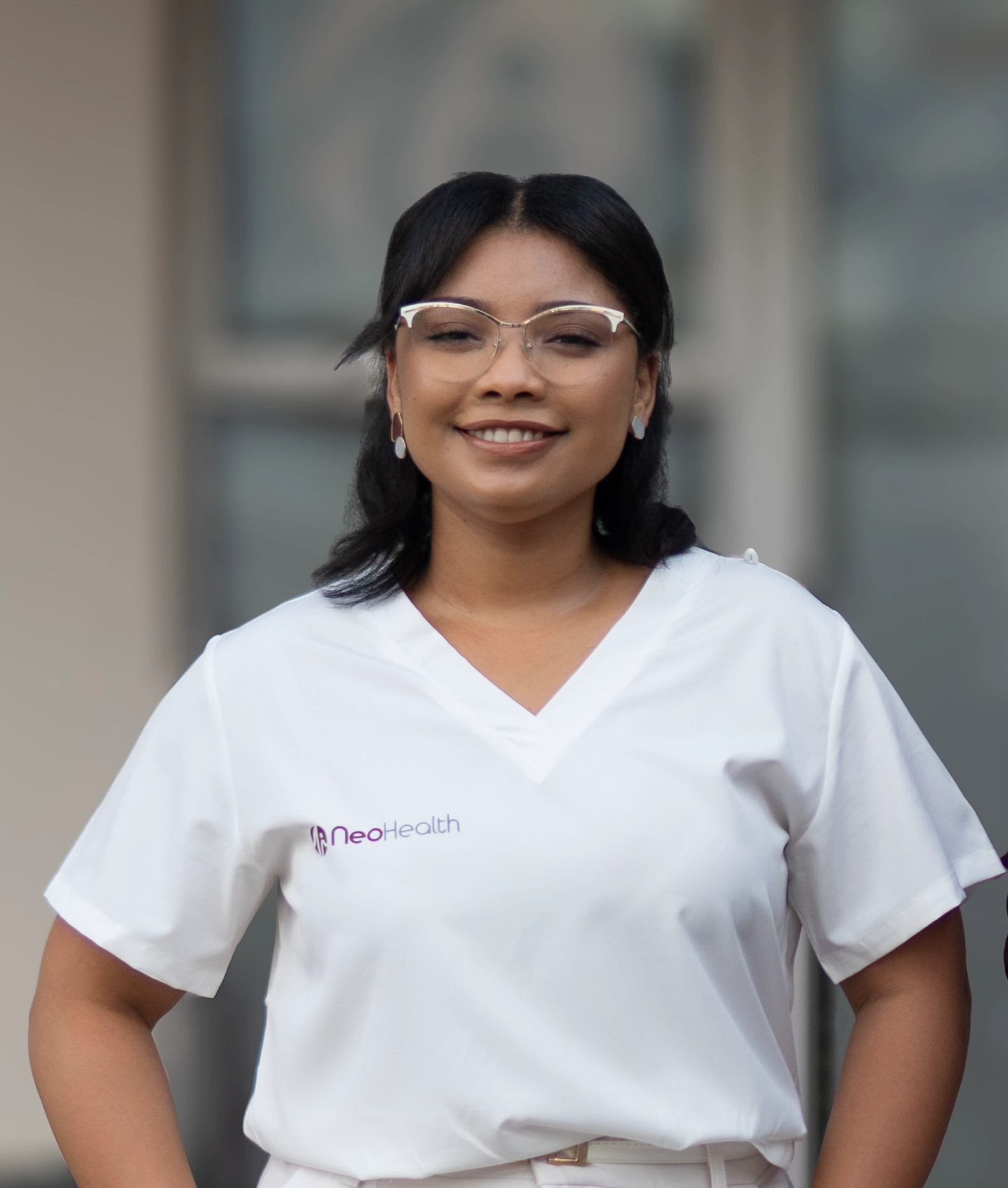
Dr Claudia Lakay
Dispensing General Practitioner & Co-founder
Stellenbosch graduate, trained in the rural Eastern Cape before practising at prominent general practices in East London. One of the few female GPs in George offering comprehensive women's health, inc...
MBChB (Stellenbosch University)
Medical disclaimer
This article provides general health information for educational purposes. It is not a substitute for personalised medical advice, diagnosis, or treatment from a qualified healthcare professional. Information reflects current South African clinical practice and referenced guidelines at time of writing, but clinical guidelines evolve. Do not start, stop, or change any medication or treatment based on this article alone.
Reviewed in accordance with HPCSA ethical guidelines on health information publishing and NeoHealth's editorial policy.
For medical emergencies: call 10177 or go to your nearest emergency centre. For personal assessment, book a consultation at NeoHealth.