
Cervical Screening Explained: A Guide for Women in George and the Garden Route

This article is educational content based on current peer-reviewed guidelines and is intended for general information only. It is not personalised medical advice, a diagnosis, or a treatment recommendation. Please seek the advice of a qualified healthcare provider for any individual screening or medical concerns.
Quick answer
Cervical cancer is one of the most preventable cancers. The best current test for screening is the HPV test (not the older Pap smear alone), recommended for most women from age 25 every 5 to 10 years. Screening takes a few minutes and is done during a routine women's health consultation. Dr Claudia Lakay, a female GP at NeoHealth in George Central, offers cervical screening in-rooms, serving women from across the Garden Route.
Key points
- Cervical cancer is almost entirely preventable with vaccination plus regular screening.
- HPV testing is the preferred screening method in current WHO, US, and international guidelines, more sensitive than the Pap smear alone.
- Most women should screen from age 25, every 5 to 10 years depending on the test used. Women living with HIV screen more often.
- Self-collected HPV samples are now validated and offered in some settings for women who prefer them.
- Dr Claudia Lakay performs cervical screening in-rooms at NeoHealth in George, including HPV testing, with patients coming in from Wilderness, Mossel Bay, Knysna, and across the Garden Route.
Want to book a screening with a female GP in George?
Book with Dr LakayIn this guide
- Why cervical screening matters
- HPV and how it causes cervical cancer
- HPV test vs Pap smear: what the evidence shows
- Who should screen and when
- Self-collected HPV samples
- Women living with HIV
- How screening works in South Africa: public vs private
- What happens if a result is abnormal
- HPV vaccination and how it fits in
Why cervical screening matters
Cervical cancer remains one of the most common cancers affecting women globally, and the fourth most common cancer in women overall. It is also one of the most preventable cancers in modern medicine. Regular screening can detect pre-cancerous changes on the cervix long before they become cancer, and effective treatment of those changes prevents cancer almost entirely.
In South Africa, where cervical cancer incidence remains high by global standards, screening access is uneven. Public sector screening is offered at state clinics but with long intervals and significant access gaps. Private-sector screening, including at NeoHealth in George, gives women the current best-practice test with a same-day consultation.
HPV and how it causes cervical cancer
Nearly all cervical cancer is caused by persistent infection with high-risk types of human papillomavirus (HPV). HPV is extremely common, most sexually active people acquire it at some point. In the majority of cases, the immune system clears the infection within 1-2 years without any consequence. In a minority, the infection persists, and over years or decades the persistent infection can cause cellular changes on the cervix that may eventually progress to cancer.
This is why screening works: the cellular changes take years to develop. Detecting them early means treating them before they become cancer.
HPV test vs Pap smear: what the evidence shows
There are three screening approaches currently used internationally:
Primary HPV testing is now the preferred method in most current guidelines. A sample from the cervix is tested directly for high-risk HPV types. It is more sensitive than cytology alone and has a higher negative predictive value, a negative HPV test gives stronger reassurance than a negative Pap smear.
Co-testing (HPV + cytology) is the practice of doing both tests together. It is highly sensitive but more expensive and the additional yield over HPV testing alone is small.
Cytology alone (Pap smear) is the traditional approach, still widely used. A sample of cells is examined microscopically for abnormal changes. It is less sensitive than HPV testing and requires more frequent screening intervals.
The American Cancer Society 2026 update recommends primary HPV testing every 5 years starting at age 25 for women at average risk. The US Preventive Services Task Force and WHO 2021 guidelines have also transitioned to HPV-based screening as the preferred approach.
Who should screen and when
For most women at average risk:
- Start at age 25.
- Primary HPV testing every 5 years (preferred).
- Co-testing every 5 years (alternative).
- Cytology alone every 3 years (if HPV testing is not available).
- Stop at age 65 if previous screening has been adequate and consistently negative.
For women with specific risk factors, HIV infection, organ transplant, immunosuppression, previous abnormal result, or a history of cervical cancer or pre-cancer, screening intervals are shorter and start earlier.
Self-collected HPV samples
In the last few years, self-collected HPV testing has been validated and accepted as equivalent to clinician-collected samples for primary HPV screening. A woman uses a swab to collect her own sample from the vagina, and it is processed in the same way in the laboratory.
This matters particularly for women who have not screened because they find clinical sampling uncomfortable or inaccessible. Self-collection reduces a meaningful access barrier without compromising test quality.
Self-collected HPV testing is increasingly available in South African private practice, and can be discussed at the consultation. The downside is that a positive self-collected sample still needs follow-up with a clinician-performed examination, so for many women, coming in for an in-rooms screen remains the more efficient path.
Women living with HIV
Women living with HIV have a substantially higher risk of HPV persistence and progression to cervical cancer and are recommended to screen more frequently. Current WHO and SA National Department of Health guidance recommends:
- Screening from the time of HIV diagnosis (not at age 25).
- Screening every 2-3 years if HPV-negative, and more frequently based on any abnormal result or CD4 count.
At NeoHealth, Dr Chellan's Diploma in HIV Management (CMSA) means patients already established on HIV care can have cervical screening integrated into their HIV follow-up visits with Dr Claudia Lakay.
How screening works in South Africa: public vs private
Public sector: Cervical screening is offered at state clinics, traditionally using cytology. The National Department of Health offers free screening for women aged 30+ at 10-year intervals, with more frequent screening for WLHIV. Coverage rates remain below international targets.
Private sector: Most private practices now offer HPV-based testing. The test is more sensitive, with longer screening intervals between negative results. Cost is covered by most medical aids in full or with a co-payment.
At NeoHealth in George, screening is integrated into a women's health consultation, with samples sent to local pathology for processing. Results are usually available within a week and are followed up directly with the patient.
What happens if a result is abnormal
An abnormal HPV or Pap result is not a cancer diagnosis. The ASCCP 2019 risk-based management framework is used internationally to guide what happens next, based on the specific result and the woman's history. Options include:
- Repeat testing in 6-12 months (for low-risk results).
- Colposcopy, a specialist examination of the cervix with a magnifying camera, usually with a biopsy, for higher-risk results.
- Treatment of pre-cancerous changes if confirmed on biopsy. This is typically a 20-minute outpatient procedure with excellent cure rates.
Abnormal results are explained, and a referral to a gynaecologist in George or within the Garden Route is arranged where needed. Dr Lakay's standard practice is a same-day conversation about what the result means and what the next step is.
HPV vaccination and how it fits in
HPV vaccination prevents infection with the high-risk HPV types that cause most cervical cancers. In South Africa, HPV vaccination is offered free through the Department of Basic Education to Grade 4 girls. Catch-up vaccination is available in private practice for older girls and women up to age 45, though effectiveness is highest when given before first sexual activity.
Vaccination does not replace screening, vaccinated women should still screen on the standard schedule, because HPV vaccines do not cover every cancer-causing HPV type.
Talk to Dr Lakay about cervical screening in George
If you're due for cervical screening, or unsure when you last screened, book a consultation with Dr Claudia Lakay at NeoHealth, George Central. As one of the few female GPs in George offering in-rooms cervical screening with current HPV-based testing, Dr Lakay starts the consultation with a conversation about your history and any concerns.
Book a consultationImportant: This article provides general information on cervical screening based on current peer-reviewed guidelines and is intended for educational purposes only. It is not personalised medical advice. Every patient's situation is different. Please seek the advice of Dr Lakay or another qualified healthcare provider for any individual screening or medical concerns.
Related articles and services
Frequently Asked Questions
Is an HPV test the same as a Pap smear?
No. A Pap smear examines cervical cells under a microscope for abnormal changes. An HPV test looks for the virus itself. HPV testing is more sensitive and is now the preferred approach in most current guidelines.
How often do I need to screen?
For most women at average risk, every 5 years with HPV testing (or every 3 years with Pap smear alone). More frequently if you are living with HIV or have had previous abnormal results.
Does cervical screening hurt?
Most women describe it as briefly uncomfortable rather than painful. A speculum examination takes a few minutes. A female GP performing the screening, with a calm and unhurried approach, makes a meaningful difference.
Can I still get cervical cancer if I've been vaccinated?
The risk is much lower, but vaccination does not cover every cancer-causing HPV type. Screening remains recommended for vaccinated women on the standard schedule.
Do I need to stop screening at some age?
Most guidelines recommend stopping at age 65 for women with consistently negative previous screening. Women with previous abnormal results or higher-risk histories may screen for longer.
Where can I have cervical screening done in George?
NeoHealth is located in Suite 12, Prince Vintcent Square, Gloucester Avenue, George Central. Dr Claudia Lakay performs cervical screening in-rooms, including HPV testing. Patients come from across the Garden Route, Wilderness, Mossel Bay, and Knysna.
About the Author
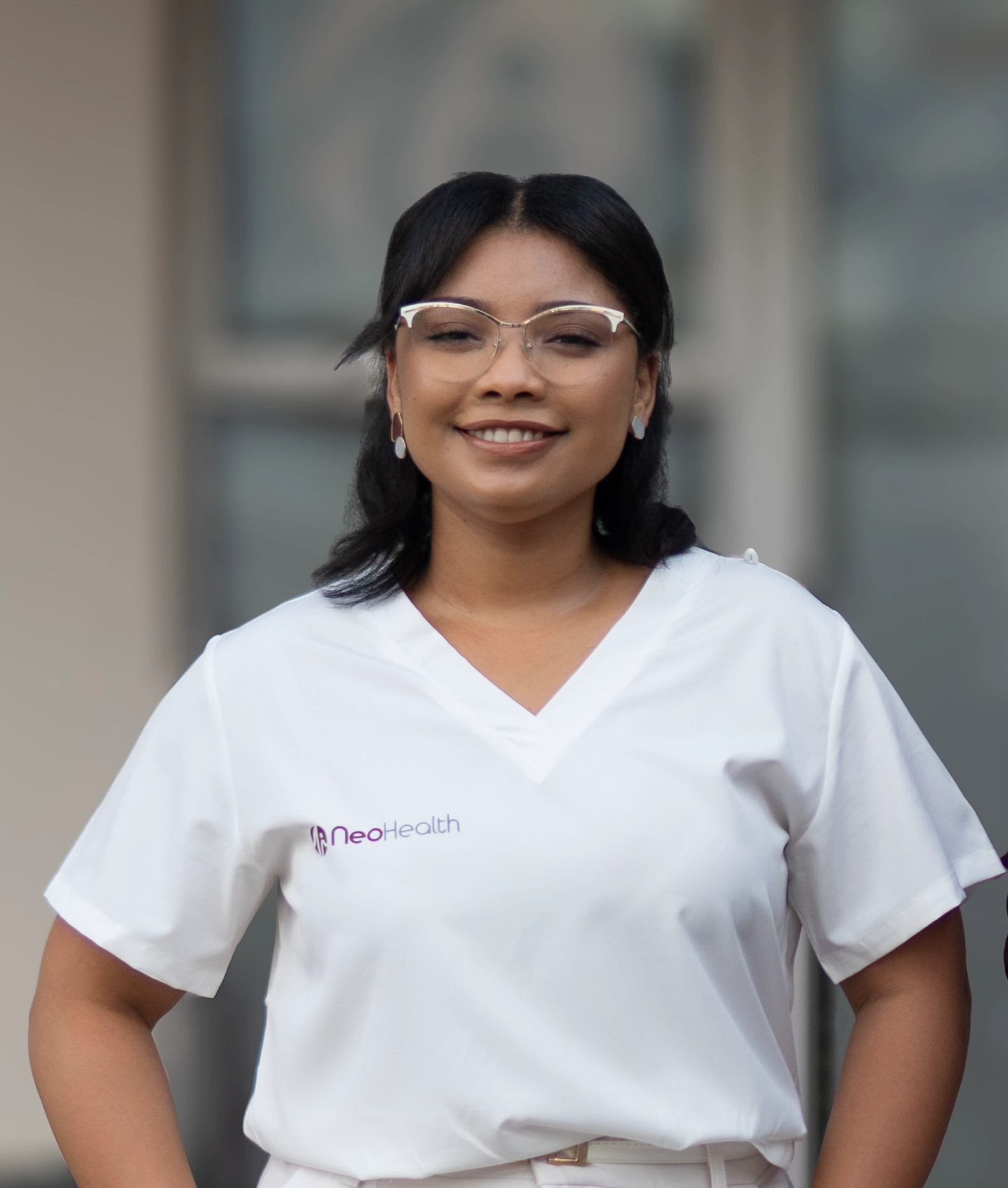
Dr Claudia Lakay
Dispensing General Practitioner & Co-founder
Stellenbosch graduate, trained in the rural Eastern Cape before practising at prominent general practices in East London. One of the few female GPs in George offering comprehensive women's health, inc...
MBChB (Stellenbosch University)
Medical disclaimer
This article provides general health information for educational purposes. It is not a substitute for personalised medical advice, diagnosis, or treatment from a qualified healthcare professional. Information reflects current South African clinical practice and referenced guidelines at time of writing, but clinical guidelines evolve. Do not start, stop, or change any medication or treatment based on this article alone.
Reviewed in accordance with HPCSA ethical guidelines on health information publishing and NeoHealth's editorial policy.
For medical emergencies: call 10177 or go to your nearest emergency centre. For personal assessment, book a consultation at NeoHealth.