
STI Testing in George: A Confidential, Evidence-Based Guide

This article is educational content based on current peer-reviewed guidelines. It is not personalised medical advice. Individual testing decisions depend on your sexual history, health, and risk factors, and should be made in consultation with a doctor. All testing at NeoHealth is confidential.
Quick answer
Most STIs cause no symptoms at all. Routine screening, not waiting for symptoms, is how infections are found. A comprehensive STI screen typically includes HIV, syphilis, chlamydia, and gonorrhoea testing, with hepatitis and trichomoniasis added based on individual risk. Modern laboratory tests (NAAT, 4th-generation HIV) are far more sensitive than symptom-based approaches. Private GPs in George, including Dr Claudia Lakay and Dr Ethan Chellan at NeoHealth, offer confidential, in-rooms STI testing with laboratory-based results.
Key points
- Most STIs are asymptomatic, a 2023 South African study of women on PrEP found 25.7% had chlamydia and 14.1% had gonorrhoea, but only 9% had symptoms.
- Modern tests are fast and accurate, NAAT for chlamydia/gonorrhoea, 4th-generation HIV tests, two-step syphilis testing.
- PrEP is available in both public and private sectors, free in the public sector, and available at NeoHealth with integrated STI monitoring.
- Confidentiality is absolute, STI testing at a private GP is not shared with partners, family, or employers.
- NeoHealth offers comprehensive, confidential STI testing in George Central, with Dr Ethan Chellan holding a Diploma in HIV Management (CMSA). Patients come from across the Garden Route.
Want confidential STI testing with a private GP in George?
Book with NeoHealthIn this guide
- Who should consider routine STI screening
- HIV testing: how modern tests work
- PrEP in South Africa
- Chlamydia and gonorrhoea testing
- Syphilis testing
- Trichomoniasis
- Hepatitis B and C: universal screening now recommended
- HPV is not routine STI screening
- The South African context: syndromic vs laboratory-based testing
- Partner notification
- What to expect at a testing appointment
Who should consider routine STI screening
International guidance recommends:
- Sexually active women under 25, annual chlamydia and gonorrhoea testing; HIV and syphilis risk-based; hepatitis B and C at least once.
- Sexually active women 25+ with risk factors, annual chlamydia, gonorrhoea, HIV; other tests risk-based.
- Men who have sex with men, at least annual testing for chlamydia, gonorrhoea, syphilis, HIV; every 3-6 months if higher-risk.
- Pregnant women, syphilis, HIV, chlamydia, and hepatitis B at first antenatal visit.
- People living with HIV, at entry into care and at least annually.
- People starting PrEP, at initiation and every 3 months.
Anyone with a symptom, unusual discharge, pain on urination, genital sores, abnormal bleeding, pelvic or testicular pain, should book an appointment rather than wait for a routine screen.
HIV testing: how modern tests work
Fourth-generation antigen/antibody immunoassay (laboratory-based) is the gold-standard initial test. It detects both HIV antibodies and HIV p24 antigen. Sensitivity 99.76-100%, specificity 99.50-100%. Reliable from roughly day 13-20 (via p24) and day 20-30 (via antibodies).
Rapid point-of-care antibody tests give results in 20 minutes. Third-generation rapid tests miss acute infection. Fourth-generation rapid tests have improved but still have 67-82% sensitivity in the first three weeks.
HIV RNA testing (PCR) detects infection from around day 6-8.
Window period summary: HIV RNA: day 6-8. p24 antigen: day 13-20. Antibodies: day 20-30.
A reactive rapid test should always be followed by a laboratory-based confirmatory test.
PrEP in South Africa
Pre-exposure prophylaxis (PrEP) is antiretroviral medication taken by HIV-negative people to prevent HIV acquisition. Used consistently, oral PrEP is over 99% effective at preventing HIV from sex.
In South Africa, oral PrEP was introduced in the public sector in 2016 and is now available at over 3,000 facilities, free in the public sector. PrEP is also available in the private sector, including at NeoHealth.
Current guidance recommends PrEP for:
- Anyone requesting it.
- Sexually active individuals at risk of HIV acquisition.
- Sexual partners of people living with HIV (unless the partner is virally suppressed).
- People who share injection drug equipment.
PrEP options: Daily oral PrEP (tenofovir-emtricitabine), event-driven PrEP ("2-1-1") for cisgender men who have sex with men only, long-acting injectable cabotegravir.
PrEP monitoring: HIV testing at initiation and every 2-3 months; kidney function; hepatitis B testing before starting; STI screening at initiation and every 3 months.
At NeoHealth, Dr Ethan Chellan's Diploma in HIV Management (CMSA) means PrEP initiation and monitoring happens in-rooms, without needing specialist referral.
Chlamydia and gonorrhoea testing
The gold-standard test is nucleic acid amplification testing (NAAT). Sensitivity >90-97%, specificity >98-99%. Performed on:
- Vaginal swabs (self- or clinician-collected, both are accurate)
- First-void urine
- Pharyngeal swabs (throat) where there's been oral exposure
- Rectal swabs where there's been anal exposure
Extragenital testing matters. Urine-only screening misses around 83% of chlamydia and gonorrhoea infections in MSM.
Repeat testing 3 months after treatment is recommended because reinfection rates are high.
Syphilis testing
Syphilis testing requires two tests because no single test tells the full story.
- Treponemal tests (TP-PA, EIA, CIA, FTA-ABS), detect antibodies specific to the bacterium. Generally stay positive for life after any syphilis infection.
- Non-treponemal tests (RPR, VDRL), titres rise with active infection and fall with successful treatment.
Syphilis has been returning as a public health concern, including in South Africa. A reactive treponemal test with a non-reactive non-treponemal test generally indicates previous treated or late latent infection, not active disease.
Trichomoniasis
NAAT is the preferred test (sensitivity 95-100%). Wet-mount microscopy has only 51-65% sensitivity and misses many infections.
Hepatitis B and C: universal screening now recommended
Hepatitis B: Current US CDC guidance (2023) recommends universal one-time screening for all adults aged 18+, using triple-panel testing. Particularly relevant for people born in Africa.
Hepatitis C: Universal one-time screening recommended for all adults aged 18-79. Modern hepatitis C treatment is curative in most cases with 8-12 weeks of oral antivirals.
HPV is not routine STI screening
HPV is the most common sexually transmitted infection, but HPV testing is not used as routine STI screening.
HPV testing is part of cervical cancer screening, detecting high-risk HPV types that cause cervical pre-cancer. For more on HPV and cervical cancer, see our cervical screening guide.
The South African context: syndromic vs laboratory-based testing
The public sector has historically used syndromic management, patients with symptoms are treated empirically without laboratory testing. The approach has advantages but significant limitations: it misses most asymptomatic infections.
A 2023 South African study of women on PrEP found that 25.7% had chlamydia and 14.1% had gonorrhoea on laboratory testing, but only 9% had symptoms.
The private sector, including NeoHealth in George, offers laboratory-based testing (NAAT, 4th-generation HIV tests, two-step syphilis testing), extragenital swabs where indicated, and treatment guided by actual test results.
Partner notification
If an STI is diagnosed, partner notification is part of care. South African guidance uses a patient-centred approach: patient referral, provider-assisted notification (sometimes anonymously), or contract referral. Disclosure is never handled without your involvement and agreement. Confidentiality is strictly protected, including HIV status.
What to expect at a testing appointment
At NeoHealth, a routine STI screen typically includes:
- A confidential history of sexual activity, partners, and any symptoms, used to guide which tests are appropriate, not to judge.
- Samples: finger-prick blood for rapid HIV; venous blood for laboratory HIV, syphilis, and hepatitis; swabs or urine for chlamydia, gonorrhoea, trichomoniasis NAAT.
- Results: rapid HIV in 20 minutes; laboratory results in 1-7 working days.
- A plan for any positive result: treatment, partner notification, follow-up testing.
A basic STI screen takes about 20-30 minutes. Samples are labelled, processed, and billed confidentially.
Talk to NeoHealth about STI testing in George
If you'd like confidential STI testing, routine screening, after a specific risk event, or starting PrEP, book a consultation with NeoHealth. All testing is comprehensive, confidential, and based on current international guidelines. Dr Ethan Chellan's Diploma in HIV Management (CMSA) means HIV care and PrEP are handled in-house by a GP with advanced postgraduate HIV training.
Book a consultationImportant: This article provides general information on sexually transmitted infection testing based on current peer-reviewed guidelines and is intended for educational purposes only. It is not personalised medical advice.
Related articles and services
Frequently Asked Questions
Do I need an STI test if I don't have symptoms?
Most STIs are asymptomatic. Routine testing is recommended for sexually active people based on age and risk factors. Waiting for symptoms is not a reliable strategy.
How often should I be tested?
For most sexually active women, annual testing if they have risk factors; every 3 months for people on PrEP or in higher-risk categories. Exact frequency is best decided with a doctor.
How confidential is STI testing at a private GP?
STI testing at a private GP is fully confidential. Results are not shared with partners, family, or employers.
How long do I wait after a possible exposure to test?
For HIV, a 4th-generation test is reliable from around 3 weeks; an RNA test from around day 6-8. For chlamydia and gonorrhoea, 1-2 weeks. For syphilis, 3-6 weeks.
Is HIV testing part of a routine STI screen?
Yes. HIV testing is standard in any comprehensive STI screen, unless you opt out.
What if my test is positive?
Most STIs are straightforward to treat. Chlamydia, gonorrhoea, syphilis, and trichomoniasis are all curable with a short course of antibiotics. HIV is now a highly treatable condition. Hepatitis B and C both have effective treatments.
Where can I have STI testing done in George?
NeoHealth is located in Suite 12, Prince Vintcent Square, Gloucester Avenue, George Central. Dr Ethan Chellan (Diploma in HIV Management (CMSA)) and Dr Claudia Lakay offer comprehensive, confidential STI testing. Patients come from across the Garden Route.
About the Author
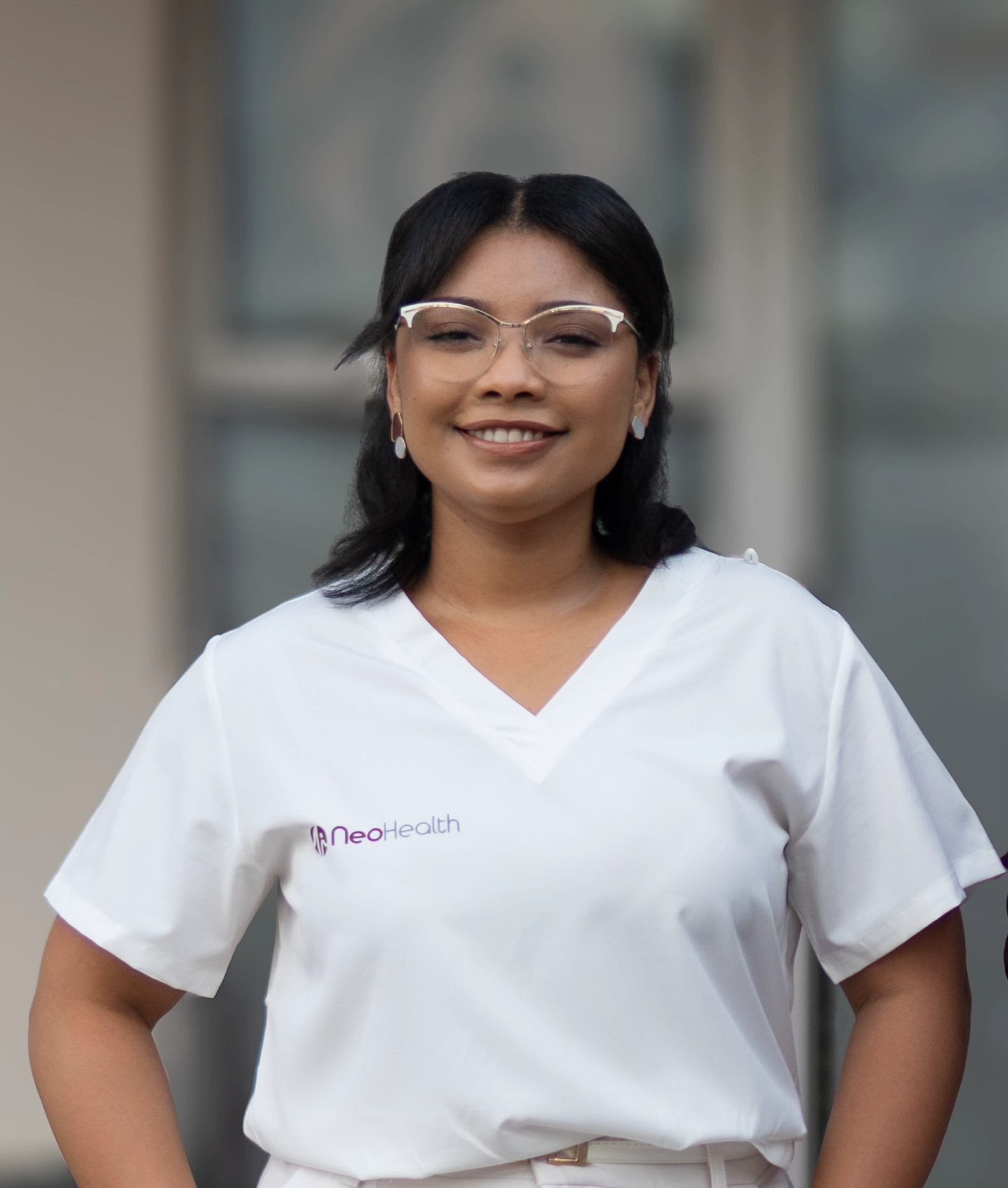
Dr Claudia Lakay
Dispensing General Practitioner & Co-founder
Stellenbosch graduate, trained in the rural Eastern Cape before practising at prominent general practices in East London. One of the few female GPs in George offering comprehensive women's health, inc...
MBChB (Stellenbosch University)
Medical disclaimer
This article provides general health information for educational purposes. It is not a substitute for personalised medical advice, diagnosis, or treatment from a qualified healthcare professional. Information reflects current South African clinical practice and referenced guidelines at time of writing, but clinical guidelines evolve. Do not start, stop, or change any medication or treatment based on this article alone.
Reviewed in accordance with HPCSA ethical guidelines on health information publishing and NeoHealth's editorial policy.
For medical emergencies: call 10177 or go to your nearest emergency centre. For personal assessment, book a consultation at NeoHealth.