
PCOS Explained: A Guide for Women in George and the Garden Route
This article is educational content based on current peer-reviewed guidelines. It is not personalised medical advice. PCOS diagnosis requires examination, blood tests, and exclusion of other causes, none of which can happen through a website.
Quick answer
Polycystic ovary syndrome (PCOS) affects around 1 in 8 women globally and is the most common hormonal condition in women of reproductive age. It causes irregular periods, raised androgens (acne, hair changes), and in some women, polycystic-looking ovaries on ultrasound. The 2023 International Guideline allows diagnosis with irregular periods + raised androgens alone, ultrasound is not always needed. Dr Claudia Lakay, a female GP at NeoHealth in George Central, offers PCOS assessment and management, serving the Garden Route.
Key points
- PCOS affects roughly 1 in 8 women (~12% globally). It is commonly missed or misdiagnosed.
- Diagnosis uses the Rotterdam criteria, two of three features: irregular periods, raised androgens (clinical or blood test), polycystic ovaries on ultrasound or raised AMH.
- The 2023 Guideline simplified diagnosis, women with both irregular periods and hyperandrogenism can be diagnosed without needing ultrasound.
- PCOS is lifelong. It needs management across cycles, metabolic health, mental health, and fertility planning, not a one-off treatment.
- Dr Claudia Lakay offers PCOS consultations at NeoHealth in George Central, with patients travelling from Wilderness, Mossel Bay, Knysna, and across the Garden Route.
Suspect PCOS? Want a proper assessment with a female GP in George?
Book with Dr LakayIn this guide
What PCOS actually is
PCOS is a condition affecting how the ovaries work, with wider effects on metabolism, skin, mood, and long-term cardiovascular and metabolic health. Its three defining features are irregular or absent ovulation, elevated androgens (male-type hormones), and, in some women, ovaries with multiple small follicles visible on ultrasound.
The name is slightly misleading: most women with PCOS do not have "cysts" in the usual sense. The "cysts" are small underdeveloped follicles arrested at an early stage. Many women with PCOS have completely normal-appearing ovaries on ultrasound, and many women without PCOS have polycystic-looking ovaries. Diagnosis rests on the pattern, not any single finding.
PCOS is a lifelong condition. It is manageable, often very well, but it's not something that disappears without attention.
How common is PCOS
Global prevalence using the Rotterdam criteria is approximately 12.1% of women of reproductive age. There is a significant gap in evidence from Africa, the most recent global systematic reviews found no high-quality African prevalence data. Many women live for years with undiagnosed PCOS, attributing symptoms to stress, weight, or "just how things are."
The symptoms: what PCOS can look like
PCOS presents differently in different women. Possible features include:
- Irregular or absent periods, cycles longer than 35 days, fewer than eight periods a year, or gaps of 90+ days.
- Signs of elevated androgens, persistent acne beyond the teenage years, excess facial or body hair (hirsutism), and sometimes scalp hair thinning.
- Difficulty falling pregnant because of irregular or absent ovulation.
- Weight changes, particularly around the abdomen.
- Insulin resistance and pre-diabetes, sometimes marked by acanthosis nigricans (dark, velvety skin patches).
- Mood changes, PCOS is strongly associated with increased rates of depression and anxiety.
- Sleep problems, including obstructive sleep apnoea.
- Fatigue and energy changes.
None of these diagnose PCOS on their own. Many conditions cause similar symptoms, thyroid disease, hyperprolactinaemia, non-classical congenital adrenal hyperplasia, Cushing's syndrome. A proper assessment rules these out.
How PCOS is diagnosed: the 2023 International Guideline
Diagnosis is based on the Rotterdam criteria, reaffirmed and simplified in the 2023 International Evidence-Based Guideline. An adult woman has PCOS if she meets two of these three criteria, after other causes have been excluded:
- Clinical or biochemical evidence of elevated androgens (signs such as hirsutism, persistent acne, or raised testosterone on blood testing).
- Ovulatory dysfunction (irregular or absent periods).
- Polycystic ovarian morphology on ultrasound OR elevated anti-Müllerian hormone (AMH).
The 2023 simplification: if a woman has both irregular cycles AND clinical or biochemical signs of elevated androgens, she meets criteria for PCOS without needing an ultrasound or AMH test. This matters particularly for women in George and the Garden Route where access to specialist ultrasound may involve a delay or additional cost.
The workup: what tests are actually needed
Hormone tests: Total testosterone and SHBG, TSH and prolactin (to exclude thyroid and pituitary causes), 17-hydroxyprogesterone (to exclude non-classical congenital adrenal hyperplasia).
Metabolic workup: Oral glucose tolerance test (OGTT) is recommended for all women with PCOS at diagnosis, regardless of weight. Fasting lipid profile at diagnosis. Blood pressure annually.
Screening for associated conditions: Depression and anxiety screening for all women. Obstructive sleep apnoea screening where symptoms suggest it.
Long-term health implications
Type 2 diabetes. Women with PCOS have increased risk of impaired glucose tolerance and type 2 diabetes, independent of age and weight.
Cardiovascular disease. Lipid profiles tend to be less favourable. Long-term preventive attention matters.
Endometrial cancer. Prolonged absence of ovulation leads to chronically unopposed oestrogen stimulation. Women with PCOS have an estimated 2.7-fold increase in endometrial cancer risk. This is one reason that regulating cycles is a standard part of PCOS management.
Mental health. Rates of depression and anxiety are significantly higher. Current guidelines recommend active screening.
Other risks: Non-alcoholic fatty liver disease, pregnancy complications (gestational diabetes, pre-eclampsia, preterm birth, caesarean delivery).
Evidence-based management
Lifestyle as foundation. Healthy lifestyle is vital throughout the lifespan. What matters is sustainability. Weight stigma is specifically addressed in current guidelines.
Combined hormonal contraceptives are first-line pharmacological treatment for menstrual irregularity and hyperandrogenism. They also provide endometrial protection. The hormonal IUD is another option for endometrial protection and lighter bleeding.
Metformin is first-line for the metabolic features of PCOS, particularly insulin resistance. It has more evidence than inositols.
For fertility, current guidance positions letrozole as first-line for ovulation induction. Fertility support is usually a specialist referral, NeoHealth can refer to established fertility specialists in George and the Garden Route.
Mental health support is integrated throughout care, not an afterthought.
PCOS and pregnancy
PCOS is classified as a high-risk pregnancy condition. OGTT is recommended at preconception and again at 24-28 weeks. Optimising glycaemic status and weight before conception improves outcomes. Letrozole is first-line for ovulation induction.
Women planning pregnancy benefit from a pre-conception consultation to review these factors.
The South African context
Local data are scarce. International guidance fills the gap in clinical practice. Access to the full diagnostic workup differs significantly between sectors. Public sector transvaginal ultrasound is typically available only at district hospital level. AMH and detailed androgen panels may not be routinely available. In the private sector, including at NeoHealth in George, the full workup is available.
The 2023 Guideline's simplified diagnostic pathway is particularly useful here. Women with both irregular cycles and clinical hyperandrogenism can be diagnosed in a GP consultation with basic blood tests, without waiting for ultrasound access.
Talk to Dr Lakay about PCOS in George
If you'd like a proper PCOS assessment or ongoing management, book a consultation with Dr Claudia Lakay at NeoHealth, George Central. As one of the few female GPs in George offering comprehensive hormonal health consultations, including PCOS diagnosis, metabolic screening, and long-term management, Dr Lakay's approach starts with understanding the individual woman, not just the diagnosis.
Book a consultationImportant: This article provides general information on polycystic ovary syndrome based on current peer-reviewed guidelines and is intended for educational purposes only. It is not personalised medical advice.
Related articles and services
Frequently Asked Questions
Can I have PCOS with regular periods?
Regular periods make PCOS less likely but don't fully rule it out. The 2023 Guideline requires two of three features.
Do I need an ultrasound to be diagnosed?
Not necessarily. If you have both irregular cycles and hyperandrogenism, current guidance says ultrasound is not required.
Can I have PCOS if I'm thin?
Yes. Lean PCOS is well recognised. Weight is a risk modifier, not a diagnostic criterion.
Will PCOS prevent me from getting pregnant?
PCOS is a common cause of subfertility, but most women with PCOS who want to conceive eventually do, often with support. Letrozole is first-line for ovulation induction.
Is inositol as good as metformin for PCOS?
Current evidence suggests metformin has greater efficacy. Inositols have more limited clinical data.
Should I be tested for diabetes?
Yes. OGTT is recommended at diagnosis and every 1-3 years.
Where can I see a female GP about PCOS in George?
NeoHealth is located in Suite 12, Prince Vintcent Square, Gloucester Avenue, George Central. Dr Claudia Lakay offers PCOS consultations, with patients from Wilderness, Mossel Bay, Knysna, and across the Garden Route.
About the Author
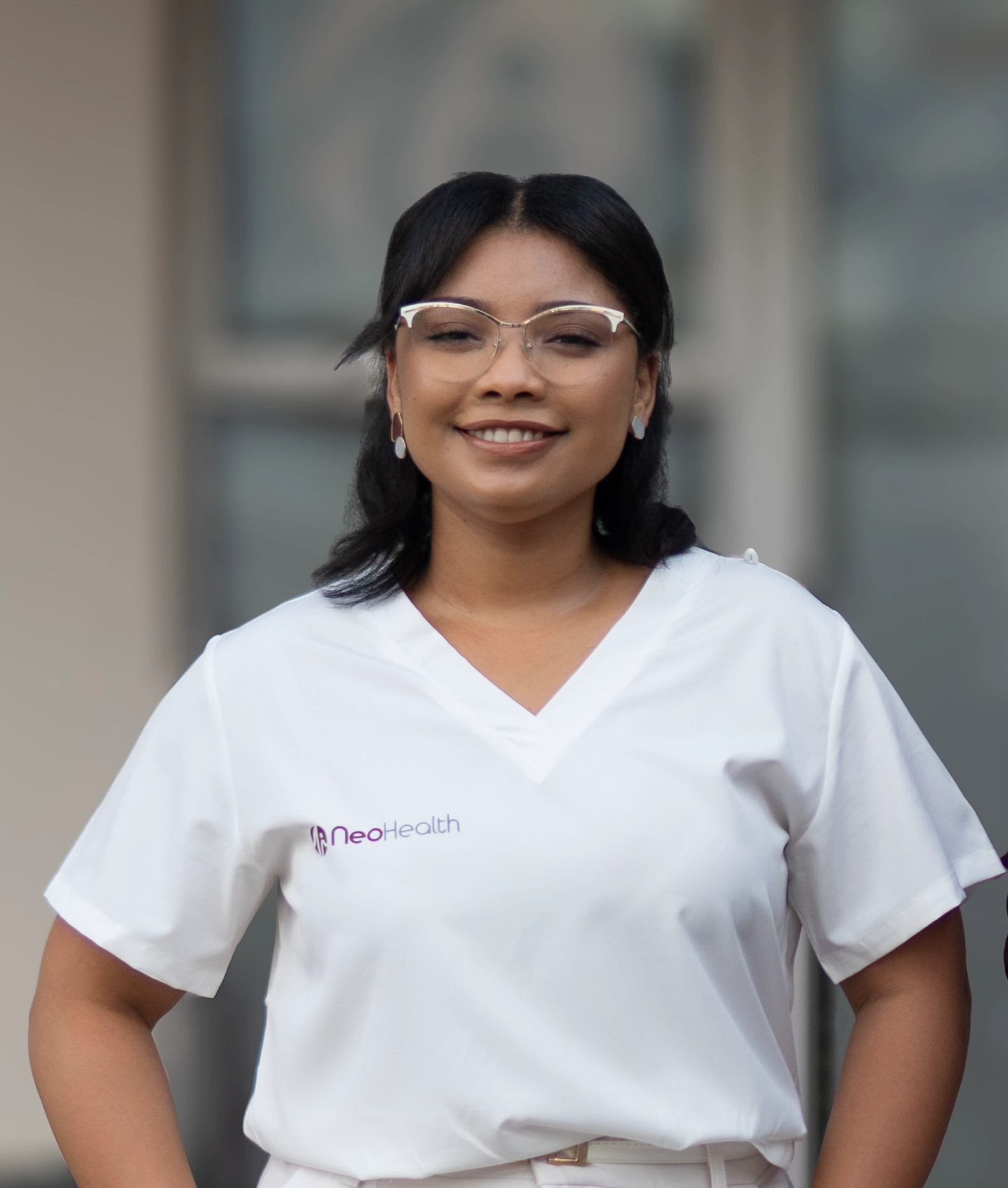
Dr Claudia Lakay
Dispensing General Practitioner & Co-founder
Stellenbosch graduate, trained in the rural Eastern Cape before practising at prominent general practices in East London. One of the few female GPs in George offering comprehensive women's health, inc...
MBChB (Stellenbosch University)
Medical disclaimer
This article provides general health information for educational purposes. It is not a substitute for personalised medical advice, diagnosis, or treatment from a qualified healthcare professional. Information reflects current South African clinical practice and referenced guidelines at time of writing, but clinical guidelines evolve. Do not start, stop, or change any medication or treatment based on this article alone.
Reviewed in accordance with HPCSA ethical guidelines on health information publishing and NeoHealth's editorial policy.
For medical emergencies: call 10177 or go to your nearest emergency centre. For personal assessment, book a consultation at NeoHealth.